
16 Painting kitchen cabinets
The project most likely to fail without the right process.
 Part of Ryan's Group
Cabinet painting · Ottawa
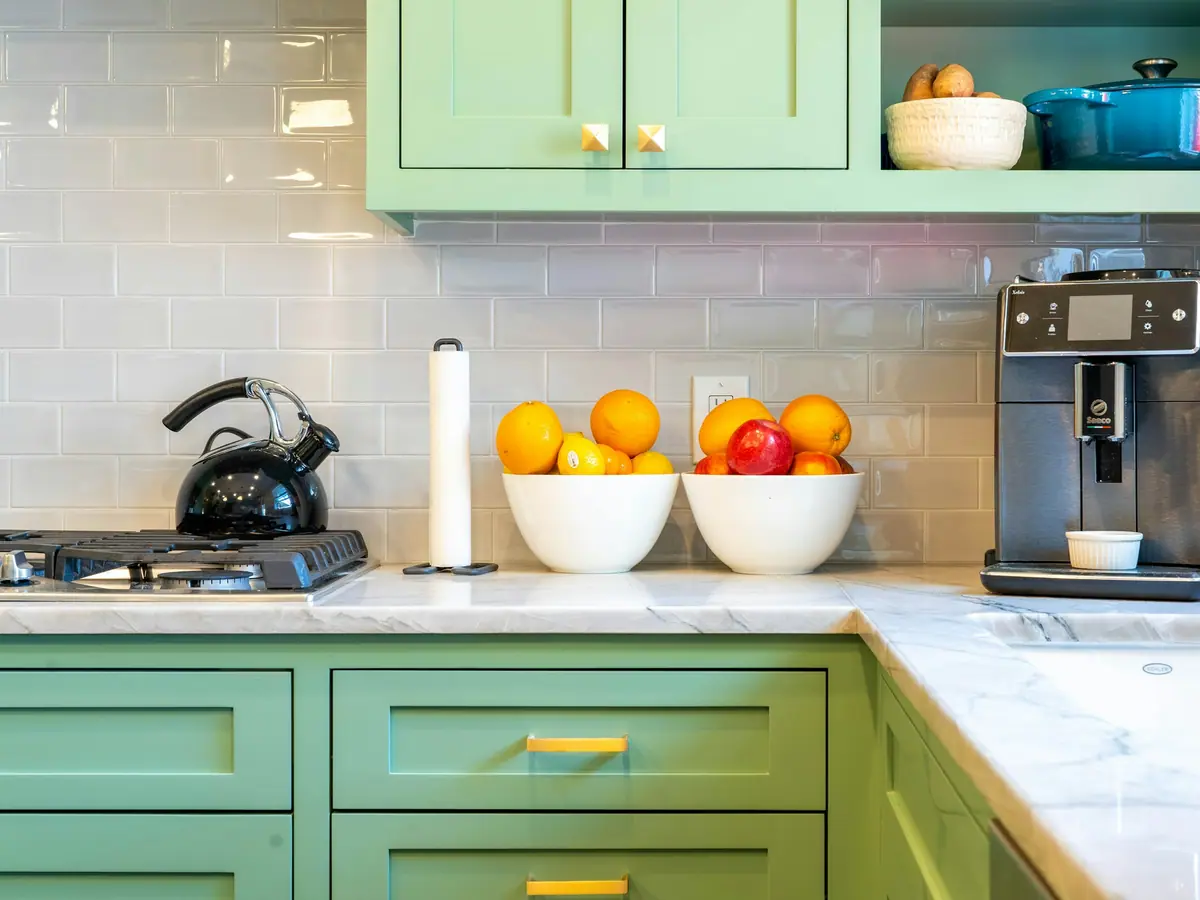
Doors, drawer fronts and frames cleaned, sanded, primed with a bonding primer and sprayed with a hard cabinet enamel, for a smooth, factory-like finish at a fraction of the cost of replacement.
Why it matters
Kitchen cabinets get opened hundreds of times a week, wiped with greasy hands and knocked by pots and shoes. Ordinary wall paint on cabinets stays soft, sticks where doors close and peels off the slick factory finish within months. Cabinet painting is closer to furniture refinishing than to painting a wall.
Ours starts with degreasing every surface, because cooking oil is the number-one reason cabinet paint fails. Then a scuff sand, a bonding primer made to grip existing finishes, and a hard cabinet enamel sprayed in thin coats. Doors and drawer fronts come off, are labelled and are finished separately, so every edge gets covered and nothing is painted shut.
Most of the cost of a new kitchen is in the boxes, the counters and the installation. If your cabinets are solid and the layout works, painting keeps all of that in place and changes what you actually see every day: the colour, the finish and the hardware.
What’s included
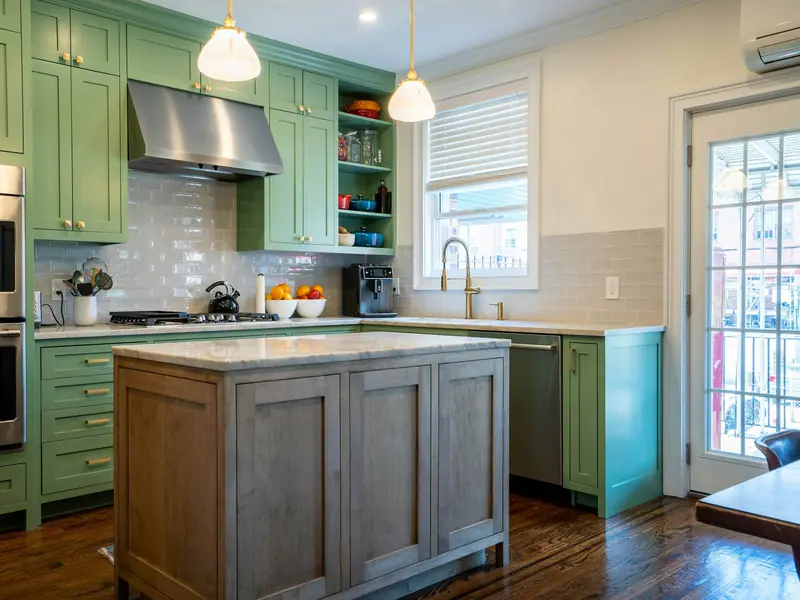
A small galley or a big kitchen with an island, every cabinet job gets the same process.
Colour and sheen chosen with samples, plus a plan for new or existing hardware and hinge holes.
Counters, backsplash, appliances and floors covered, and the kitchen sealed off to contain dust and overspray.
Every surface degreased, scuff-sanded, filled where needed and primed with a bonding primer.
Hard enamel sprayed in thin coats, doors cured, then rehung, adjusted and checked with you.
Options & finishes
Painting is the start. New hardware, soft-close hinges, filled old hardware holes, a contrasting island colour or crown moulding painted to match can make a kitchen look new without touching the boxes or the counters.
Oak cabinets from the 1980s and 90s have open grain that shows through paint. If you want a smooth, modern look, we fill the grain first; if you like a little texture, we can skip it and save the cost.
Paint or replace your cabinets?Methods compared
How the paint goes on matters as much as which paint you use.
| Method | Finish | Disruption | Worth knowing |
|---|---|---|---|
| Brush and roll on site | Slight brush or roller texture | Kitchen usable sooner | Lowest cost; texture shows on flat slab doors |
| Spray on site | Smooth, near-factory | Kitchen fully masked for several days | Needs careful masking and ventilation |
| Doors sprayed in a shop | Smoothest and most consistent | Frames done on site; doors away for a few days | Controlled dust and temperature; the most durable result |
| Refacing or replacing | New surfaces | Days to weeks | Several times the cost of painting; right when boxes are damaged |
Built for Ottawa
Cabinet enamel is sensitive to temperature and humidity while it dries and cures. Dry winter air helps; in humid summer weeks, drying takes longer, which is one reason shop-sprayed doors give the most consistent result.
Ottawa kitchens also see heavy cooking through the winter, which leaves a film of grease on cabinet faces around the range and above the sink. That’s the area we degrease twice. Paint bonds to clean, dull surfaces, not to a slick layer of cooking oil.
Cabinet painting doesn’t need a permit. Plan for a few days without full use of the kitchen: counters stay usable once the masking comes off, but doors are away or drying for several days.
If the cabinet boxes are water-damaged or sagging, or the layout no longer works, painting isn’t the right answer, and we’ll say so. Our sister company Ryan’s Renos builds new kitchens.
Cabinet painting in the painting guideHow we work
Most kitchens take 5 to 10 working days from prep to rehung doors, including cure time.
We count doors and drawers, check the boxes and the finish, and settle colour, sheen and hardware.
Doors, drawer fronts and hardware removed and labelled; counters, appliances and floors masked.
Every surface degreased, scuff-sanded, filled and cleaned of dust.
A primer made for slick finishes, sanded smooth between coats where needed.
Thin coats of cabinet enamel sprayed on doors, drawer fronts and frames.
Doors rehung and aligned, hardware installed, masking removed and a walkthrough with you.
What affects the price
Cabinet painting is priced mostly by the number of doors and drawer fronts, because each one is handled, prepped and finished on both sides. A small galley kitchen with 15 pieces costs far less than a large kitchen with an island and a pantry wall. Our Ottawa painting cost guide and estimator lets you price it by the piece.
Door style matters too: flat slab doors are quickest, shaker doors have more edges, and raised-panel and glass doors take the most time. Oak grain filling, thermofoil, hardware changes and painting the box interiors all add to the job.
If you’re comparing painting with refacing or new cabinets, look at the whole picture: new cabinets usually mean new counters, plumbing and electrical work, and several weeks without a kitchen. Painting avoids all of that.
Comparing options? Read paint or replace your kitchen cabinets, or see interior painting to refresh the walls at the same time. We paint cabinets across the region, including cabinet painting in Kanata, kitchens in Riverside South and cabinet painters in Orleans.
Painting cost guide and estimatorLiving through it
Your kitchen stays usable for much of the job with a little planning.
Empty the cabinets into boxes, starting with the ones we’ll do first. We’ll give you a plan.
The kitchen is masked off and sanding dust is contained; the fridge and sink stay accessible.
Spraying needs the area sealed. We’ll tell you which days to plan simple meals.
Go easy for a few weeks while the enamel hardens: no harsh cleaners, and wipe spills promptly.
Painting guide
The project most likely to fail without the right process.
Bare surfaces, stains, glossy finishes and big colour changes.
How long paint lasts and how to make it last longer.
A typical Ottawa kitchen costs about $3,500–6,500 sprayed, covering doors, drawer fronts and frames. That works out to roughly $110–175 per door or drawer front, including the frames and prep. Larger kitchens with an island and a pantry run higher.
With proper degreasing, a bonding primer and a hard enamel, a professional cabinet finish typically lasts about 8 to 10 years before it needs touch-ups or a refresh.
Yes. Oak’s open grain will show through the paint unless it’s filled first. We can fill and sand the grain for a smooth, modern look, or leave some texture if you prefer.
If the thermofoil is firmly bonded, yes, with a specialty bonding primer. If it’s peeling or bubbling near the stove or dishwasher, those doors should be replaced instead.
Not completely. Counters, the sink and appliances stay usable for most of the job, but expect a few days of masking and spraying when meals should be simple.
Usually not; interiors take a lot of time and see little wear. We can include them as an option if you’d like.
Mid-tone greens, blues, greys and warm whites are popular and forgiving: they hide fingerprints and small marks better than bright white or very dark colours. We can spray sample boards so you see the colour and sheen before committing.
Yes. We can fill the old holes, drill for new pulls and swap in soft-close hinges while the doors are off, so everything goes back on looking and working like new.
Other services
Walls, ceilings, trim and doors with real prep and two coats.
Holes, dents, cracks and stains fixed before the paint goes on.
Offices, retail, condo corridors and rental turnovers.
Last updated:
Free quote
Talk to the painters who’ll actually do the work. Prefer to write? Send the form and we’ll get back to you within one business day.
Tell us a little about the job. Which rooms or surfaces, rough sizes, photos you can text us later and your timing all help.